LA roads are a work of art for this expressionist painter
By Bill Tarrant
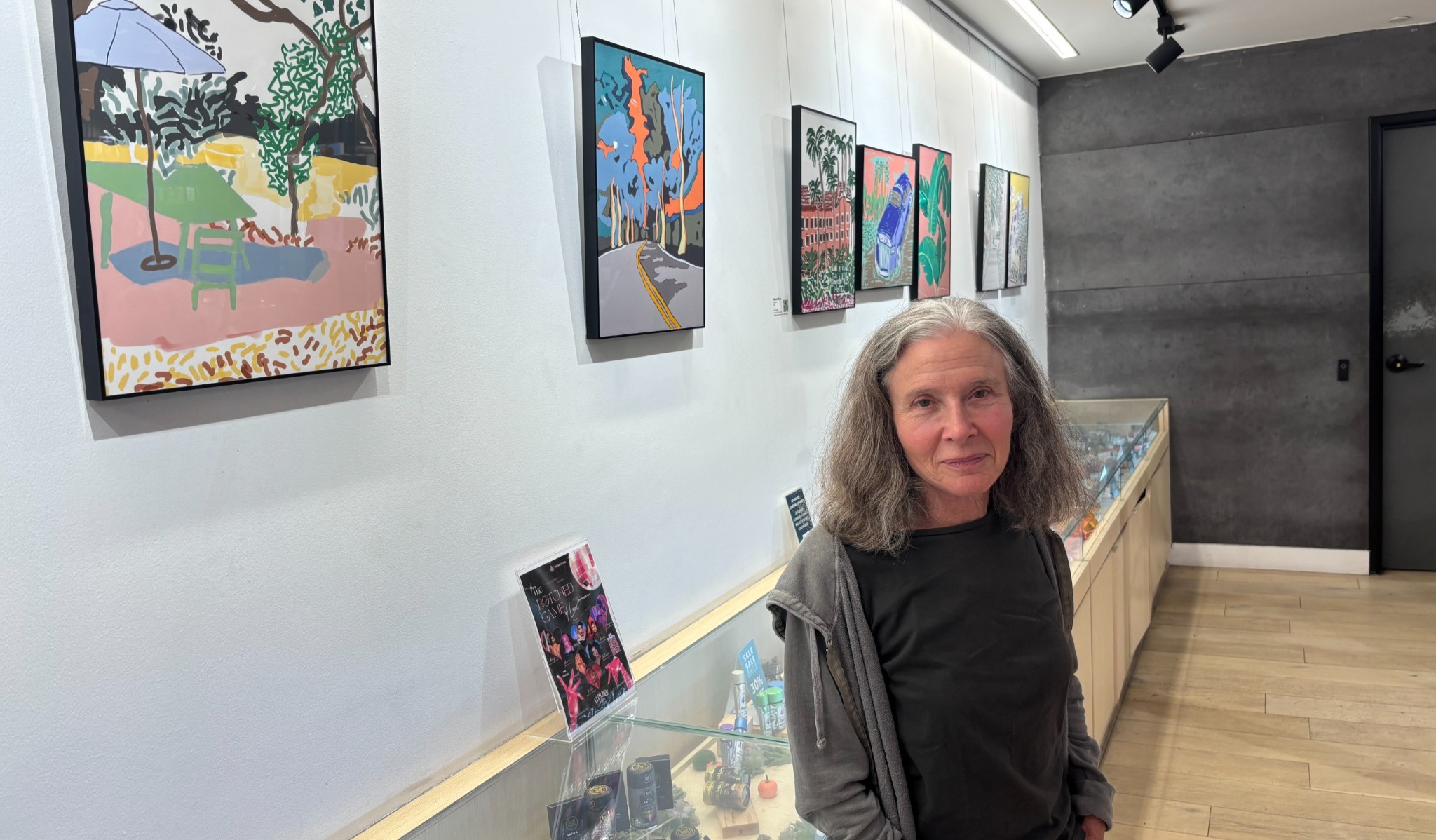
You wouldn’t think the sprawling chaos of roads in LA could be a work of art, but they are in the expressionist paintings of Deborah Blum on exhibit at a West Hollywood cannabis dispensary, where you can perhaps get high and see that imagined.
Many of her expressionist paintings reflect intensely personal experiences of the city; iconic roads such as Sunset, Wilshire, Vine, and the winding streets behind the Beverly Hills Hotel. Blum grew up on Rodeo Drive in Beverly Hills in a craftsmen house built in 1913.
Her paintings are featured in a four-month exhibition at the Artist Tree cannabis dispensary in West Hollywood, where customers can cruise around the store selecting buds and joints and getting in the mood by viewing Blum’s subjective cityscapes.
Such exhibitions have been part of the DNA of the Artist Tree since the California chain of dispensaries began in San Francisco in 1992, said co-founder Lauren Fontein.
“The pieces you see in our space aren’t background decoration—they’re conversation starters, moments of discovery, and proof that cannabis and creativity belong together in the open."
Blum, who has spent four decades in the film business, says Los Angeles has long been the main subject of her artwork.
“I was born and raised here, lived away for many years, and when I returned, I began to see the city for what it is: a paradise with hills, winding roads, foliage, intersections, freeways, and architecture that represents the last hundred years.
“The thing about living in Los Angeles is that the roads themselves are a work of art. Roads represent adventure. That’s different from a city where there’s mass transit like New York. I started noticing the streetlights, the stop signs, the pedestrian walkways, the double lines down the road. All of that is like a work of art itself.”
She said she adopted an expressionist style in her childhood after her father told her to research various artists, copy their paintings and “see what you love”.
She discovered a fascination with the early 20th century Expressionist period. The French artists then were called Fauves, or “wild beasts”, because that’s what people thought about painters such as Henry Matisse, who was a leader of Fauvism.
“Everything they painted was in whatever color they felt, not its natural color, and they used these raw brush strokes,” Blum says.
She’s spent a lifetime shaping how she views reality and then reflecting it subjectively in her art. “It’s me looking at a street out there and seeing it in my mind’s eye.”
Post a comment